June 19, 2026
Are Limited Edition Wildlife Prints a Good Investment? A Collector's Guide
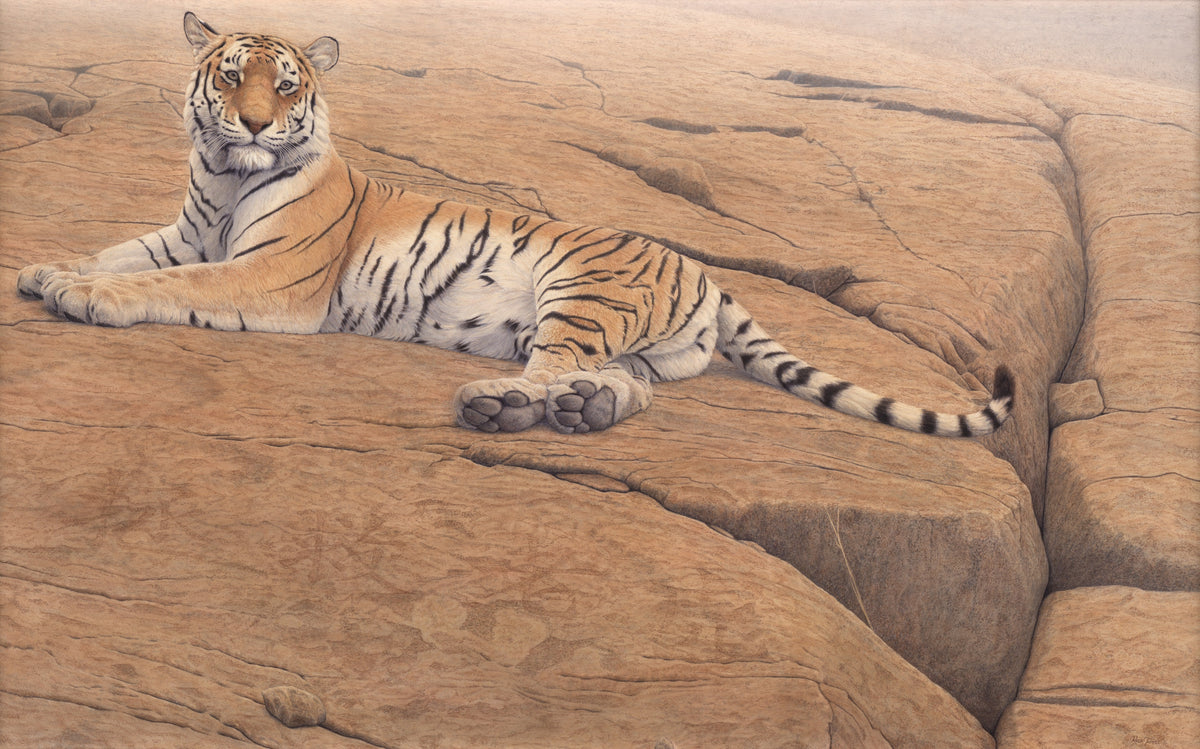
Most people who ask whether a limited edition wildlife print is a good investment are really asking two different questions at once. The first is financial: will this hold its value, or even appreciate? The second is emotional: am I about to pay a thousand euros for something I'd be embarrassed to find at a flea market in twenty years?
Both questions deserve honest answers. The short version is that limited edition wildlife prints can hold and grow in value — but only when four specific conditions are met. Most prints sold as "limited editions" satisfy one or two of those conditions. Genuine investment-grade prints satisfy all four. This guide is here to help you tell the difference, before you buy.
What “limited edition” actually means (and the common traps)
The term "limited edition" is, on its own, almost meaningless. A studio can produce 5,000 prints, call it a limited edition, and technically be telling the truth. The legal floor for the phrase is low, and the marketing ceiling is high. So before you treat any print as a collectible, you need to look past the label and check the underlying mechanics.
A real limited edition has three structural features:
- A small, fixed edition size, published and verifiable
- Sequential numbering (e.g. 47 / 295), applied by hand
- A binding commitment from the artist or publisher that no further prints will ever be released in the same format
When any of these is missing, you are not buying a limited edition in the collector sense. You are buying a print that happens to be one of many. There is nothing wrong with that — open edition prints have their place — but you should not pay a limited edition premium for an open edition product.
The two most common traps you will see in the wildlife art market:
The first is the inflated edition size. A 5,000-print "limited edition" is functionally an open edition with a number written on it. Genuine investment-tier editions in the wildlife genre tend to fall between 25 and 500 prints worldwide per painting. Anything above 750 is unlikely to develop secondary-market scarcity within a collector's lifetime.
The second is the sub-edition trick. A single painting is sometimes released as several separate "limited editions" — a paper edition of 250, a canvas edition of 100, an artist's proof run of 50, and so on. Each edition is technically limited, but the painting as a whole is reproduced more than 400 times. If you want true scarcity, look at the total number of reproductions across all formats.
Renso Tamse Limited Edition Prints are capped at 295 worldwide per painting, with the Collector's Edition tier additionally capped at 25 — a total of 320 reproductions across all formats per work. Once the edition closes, it is closed permanently.

The four factors that determine whether a limited edition holds value
This is the part of the guide that lets you evaluate any limited edition wildlife print before you buy. Four factors do the heavy lifting.
1. Edition size
Scarcity is the foundation of every secondary-market price. A print from an edition of 50 carries built-in scarcity from the day it ships. A print from an edition of 2,500 may not see meaningful scarcity for decades, if ever.
The art world has a working benchmark here: an edition under 100 prints is highly collectible regardless of artist trajectory; 100 to 300 is collectible if the artist has a meaningful body of work and a public profile; over 500 is a print rather than an investment vehicle, regardless of how the marketing is framed.
When you see edition numbers in the thousands, the artist is selling reach, not scarcity. That is a legitimate business choice — many great artists release inexpensive open editions to support their original work — but you should price your purchase accordingly.
2. The artist's trajectory
The art market is not democratic. The same edition size, on the same paper, signed by two different artists, can carry wildly different prices five years later. The single largest determinant of secondary-market value is what happens to the artist's reputation over time.
You cannot predict this with certainty, but you can read the leading indicators:
- Body of work: Is the artist producing new pieces consistently, or have they slowed dramatically? A working artist with a coherent ten-year body of work is a different proposition from one who released a few prints and disappeared.
- Gallery representation and exhibitions: Is the artist's work shown in physical galleries? Have they had solo exhibitions, museum showings, or art fair representation?
- Press and critical attention: Has the work been written about in art publications, wildlife magazines, or design press? Cultural validation lags actual quality but compounds it.
- Society membership and awards: For wildlife artists specifically, membership in groups such as the Society of Animal Artists or recognition from organisations such as Birds in Art adds verifiable credibility.
- Field credibility: Does the artist actually observe the animals they paint, or are they working entirely from photographs? In the wildlife genre, field-observation credentials matter to serious collectors.
You will not find all five for every artist whose work you love. That is not a problem. You are looking for evidence of trajectory — momentum in the right direction.
3. Authentication and provenance
A print without authentication is a print with a story problem. Twenty years from now, the buyer who would have paid you a premium needs to verify that what you are selling is what you say it is. Without paperwork, they cannot. With paperwork, your future sale becomes a transaction, not a negotiation.
A complete authentication package includes:
- A hand-signed signature from the artist (printed or stamped signatures do not carry the same weight)
- A numbered Certificate of Authenticity that records the painting title, year of release, edition number, and total edition size
- Provenance documentation — the original receipt, any gallery paperwork, and a clear record of ownership history
- A consistent edition register — a credible publisher or studio maintains a record of which prints went to which buyers, so the chain of custody is traceable
Every print you buy should arrive with at least the first three. If you are buying secondhand, the fourth becomes meaningful. The presence or absence of a complete authentication package is the single most reliable price differentiator in the secondary market.
4. Material quality and archival standards
The print on your wall in 2050 is the same print you buy today, only if the materials are built to last. They often aren't. Many "fine art" prints are produced on stock that yellows, on inks that fade, and at color profiles that drift. Twenty years later, the artwork is not what it was.
The materials that hold value:
- Cotton rag paper, typically 300–315 gsm, archival, acid-free. Names like Hahnemühle, Canson Infinity, and Moab dominate this category.
- Pigment-based inks (not dye-based) rated for 100+ years of archival permanence under normal display conditions. Look for Wilhelm Imaging Research ratings if listed.
- Giclée printing at appropriate resolution, with the painting's full tonal range preserved
- Storage and shipping flat (not rolled) for prints above a certain size, in archival packaging
These specifications are not marketing dressing. They are the difference between a print that looks the same in fifty years and one that looks tired in fifteen.

How to read a Certificate of Authenticity
When you receive a Certificate of Authenticity (COA), spend a minute reading it carefully. A good COA states:
- The painting title
- The year of release
- The print's edition number (e.g. Print 47 of 295)
- The total edition size, including all sub-editions and formats
- The medium (e.g. archival giclée on 310gsm cotton rag)
- The artist's hand-signed signature and, ideally, a wet ink stamp
- A unique serial or registration number that ties the COA to the print
If any of those fields is missing or vague, ask the artist or seller directly. Reputable studios will answer the question without hesitation.
Keep your COA somewhere safe and dry, separate from the artwork itself. The print and the COA together hold the value. Alone, each is worth less. (Many serious collectors photograph the COA and store the original in a fireproof document safe.)
Why wildlife art specifically holds value in the secondary market
Wildlife art has a structural advantage that not every fine art genre enjoys: the subjects don't go out of fashion. A masterful watercolor of a wolf in a winter landscape is just as compelling in 2050 as it is in 2026. The decorative context may change. The interior design world cycles through palettes and styles. But the human appetite for genuine craftsmanship applied to the natural world has been remarkably stable across centuries.
That stability translates into a less volatile collector market. Auction results for established wildlife artists — Robert Bateman, Carl Brenders, Bob Kuhn, and the generation working today — tend to track a steady trend line rather than the dramatic peaks and valleys of contemporary art categories.
Two other tailwinds are worth noting:
The first is conservation awareness. As public consciousness of biodiversity loss has grown, art that documents and celebrates wildlife has gained renewed cultural relevance. Some galleries now position wildlife collections explicitly as a form of cultural conservation — preserving the visual record of animals whose populations are under pressure.
The second is the AI floor effect. As AI-generated imagery floods the visual marketplace, the value of demonstrably human craft increases, not decreases. A signed and numbered limited edition print, with field-observation provenance and a credible artist trajectory, is increasingly distinguishable from algorithmic output. That distinction will only become more valuable over time.
Practical checklist before you buy
If you are about to buy a limited edition wildlife print, run this checklist:
- Edition size is under 500 prints worldwide (ideally under 300)
- All formats and sub-editions are disclosed, with a total count across formats
- The print is hand-signed and individually numbered by the artist
- A numbered Certificate of Authenticity is included
- The paper specification is stated (gsm, cotton rag, acid-free, archival)
- The ink specification is stated (pigment-based, archival, 100+ year rating)
- The artist has a verifiable body of work, a public profile, and ideally gallery or exhibition history
- The artist actively produces new work (you can see consistent output over recent years)
- Provenance is documented — you receive an original receipt or invoice
- The seller offers tracked, insured, worldwide shipping and a defined return window
If a print fails on more than two of these, treat it as a decorative purchase rather than an investment. You can still love it. You just shouldn't pay a collectible premium for it.

A note from Renso Tamse's studio
Renso's limited edition prints are released in editions of 295 worldwide per painting, with an additional Collector's Edition tier of 25 prints — a total of 320 reproductions per painting across all formats, after which the edition is permanently closed.
Each print is hand-signed and individually numbered in the studio, printed on 310gsm museum-quality fine art paper with pigment inks rated for over a century of archival permanence. Every print ships with a numbered Certificate of Authenticity that records the painting title, edition number, year, and Renso's signature. Shipping is flat, fully insured, and tracked worldwide.
The work is grounded in field observation. Renso spends weeks each year studying wildlife in natural habitat — eagles in the high Alps, wolves in the Carpathians, tigers in southern India — and the layered watercolor technique is built up slowly over many sessions in the studio. That field provenance is part of why collectors come back: the paintings carry the weight of having been seen rather than assembled from photographs.
If you would like to start a collection, the Limited Edition Prints collection is the natural entry point. For the most exclusive tier, the Collector's Edition is capped at 25 prints worldwide. And if you have a specific animal or moment in mind, a commissioned original painting is the highest-tier collector option — entirely unique, painted to your vision.
You can also read more about how Renso's four edition tiers work — what's included with each, how authentication is handled, and how the editions are managed.
Final word
The honest answer to "are limited edition wildlife prints a good investment?" is: yes, when the four conditions are met, and not otherwise. The conditions are knowable, the materials are checkable, and the artist's trajectory is researchable. If you do that work before you buy, the print on your wall is doing two jobs at once — earning its place in your home, and quietly holding its value while it does.
That, more than anything, is what separates a print from a collectible.