October 12, 2026
Raven and Wolf Art Print: A Scene Worth Looking Into
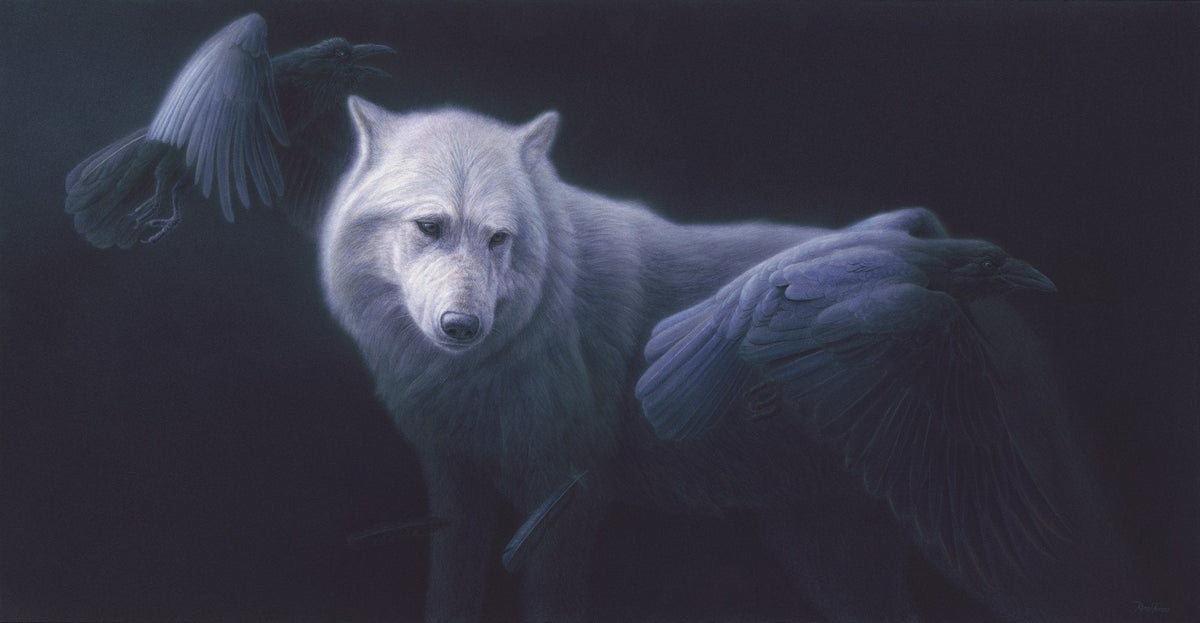
What makes a wildlife picture feel like a scene you can keep exploring? A second species can change the experience: your attention moves between animals, and the spaces connecting them become part of the interest. A Raven and Wolf art print offers that kind of looking, with a pale wolf and two dark ravens sharing a wide, shadowed composition.
If you are drawn to wolves but want more than a close-up portrait, this work is worth considering. Its appeal lies in the relationship between shapes, light and movement. You do not need to settle on a story before choosing it. The useful question is whether you enjoy returning to the whole scene.
One title, three presences
Look first at the full image of Raven and Wolf — Open Edition Print. The wolf's light face catches the eye near the centre-left. A raven appears above and behind it on the left, while another occupies the right foreground. The title names the two species; the image gives you three distinct animal forms to follow.
That arrangement creates several possible routes through the picture. You might begin at the wolf's eyes, follow the pale back towards the right-hand bird, then return through the raised wing on the left. Someone else may notice the large foreground raven first. Try both routes. The work rewards more than one point of entry.

What the dark areas contribute
The background does not describe a broad, detailed landscape. Much of the scene sits in deep blue-grey and near-black tones. Against that darkness, the wolf's face becomes a clear point of light, while the ravens' feathers emerge through subtler changes of color.
To our eye, this gives the picture a suspended, watchful atmosphere. The birds and wolf seem connected by the space they occupy, even though the image does not explain what happened before or what might follow. That is a visual interpretation, rather than a claim about Renso's intended narrative or the animals' behaviour.
The distinction matters when choosing art. You can find tension, companionship or simply a satisfying arrangement of dark and light without needing the painting to prove any of those readings. If ambiguity appeals to you, it can be a reason to keep looking.
A different encounter from Wolf Portrait
Compare the scene with Wolf Portrait — Open Edition Print. Here, a single wolf's face and upper body fill a nearly square image. Warm brown fur stands against a softer green background. The eyes and muzzle are close enough to become the main encounter.
In Raven and Wolf, your attention travels sideways between several forms. In Wolf Portrait, it returns more directly to one face. Neither approach is more serious or more expressive. They ask for different kinds of attention.

If you want an image that invites you to follow relationships and movement, start with the raven-and-wolf scene. If the expression of one animal is what holds you, spend longer with the portrait. This comparison is about choosing one work you enjoy, rather than recommending that you buy both.
A three-pass test before choosing
Give the image a little time before comparing specifications. This short exercise separates an immediate attraction from the details that may sustain it:
- First pass: the whole. View the complete artwork at a modest size. Notice which shape attracts you and whether the overall balance feels right.
- Second pass: the connections. Enlarge it. Follow the wing shapes, the wolf's back and the changes between pale fur and dark feathers. Does your interest extend beyond the face?
- Third pass: the return. Come back later without starting at the same detail. See whether another part of the composition gives you something to notice.
This is not a test you have to pass. It helps you identify what you are buying the image for. A dramatic first impression and a slower pleasure in its details can coexist.
Keep the complete scene in view
The wide format is integral to this comparison. A tightly cropped preview would remove some of the relationship between the animals. Look at the full artwork when deciding, and preserve that composition when planning its presentation.
The Open Edition listing currently offers Raven and Wolf in three labelled formats: 80 × 42 cm, 112 × 59 cm and 160 × 84 cm. Check your selected option before ordering and allow for the finished frame. These dimensions describe the listed print formats, not a framed product.
Choose the image first, then decide what the edition means to you. The website's guide to Open, Limited and Collector's Editions explains the differences without requiring you to treat the artwork as a financial investment.
If the changing balance of pale fur, dark wings and open questions is what draws you back, explore Raven and Wolf and choose the print format for your collection.